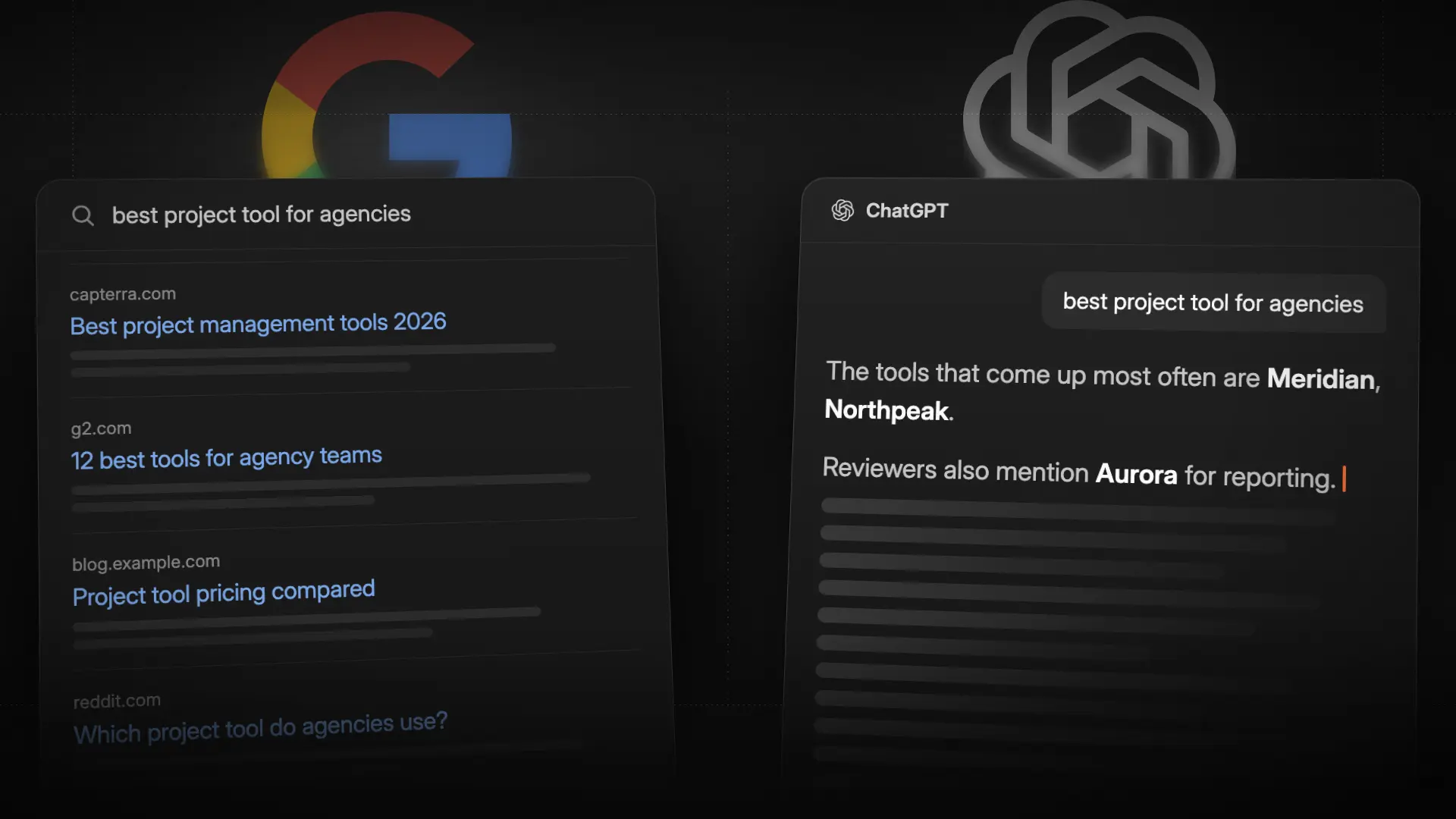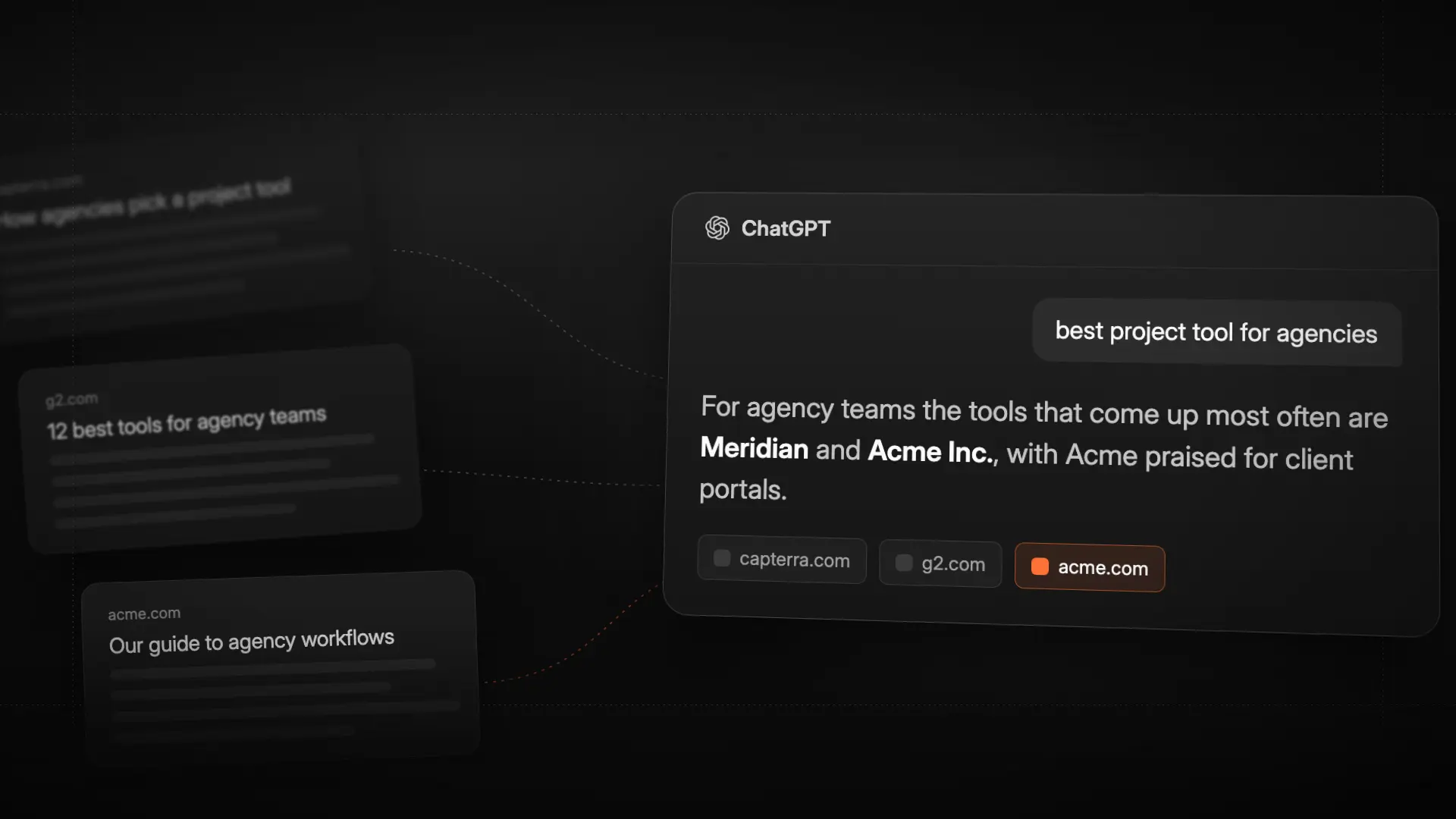
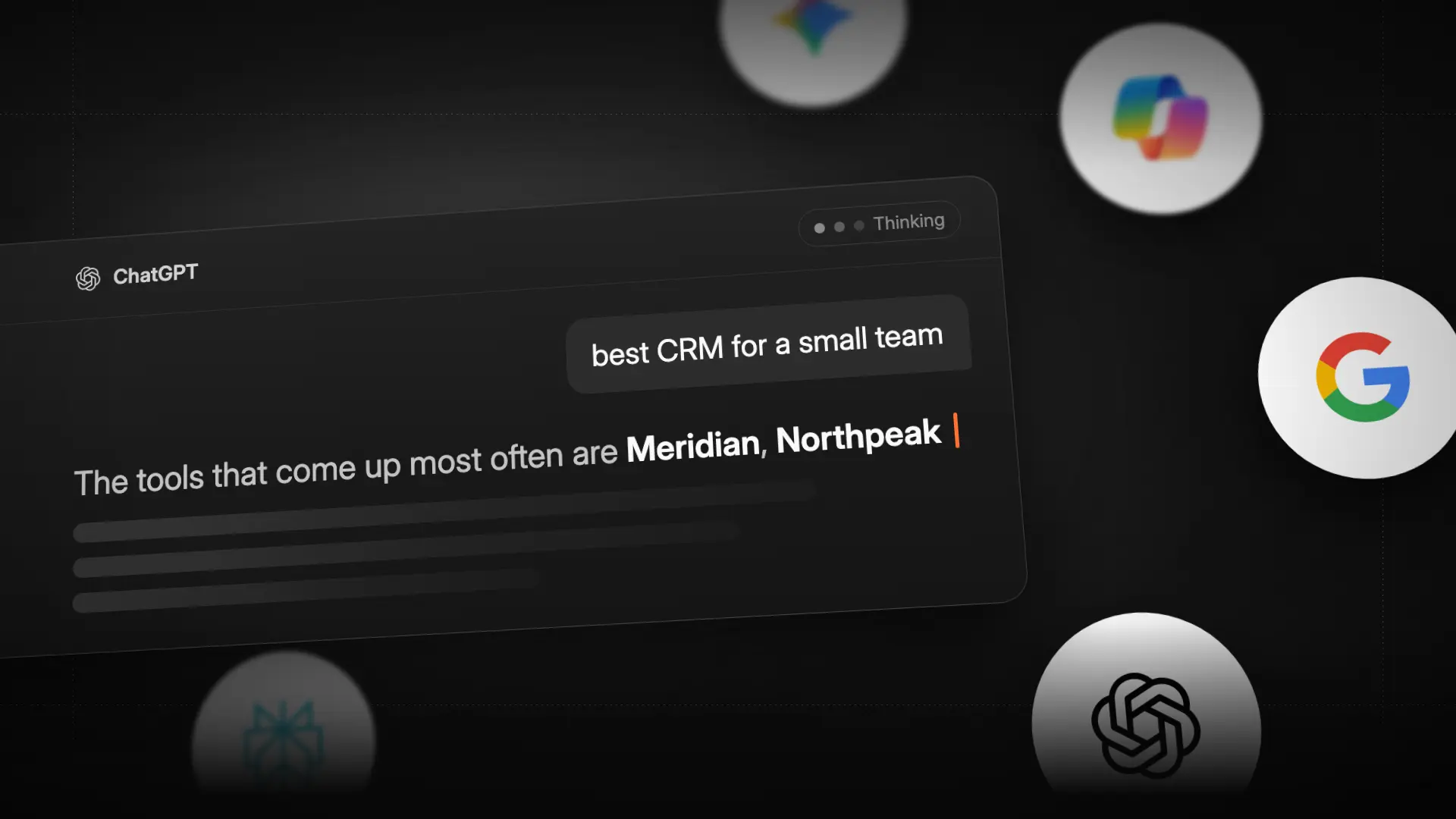
AI visibility measures how often a brand is included in the answers generated by AI assistants, tracking its presence directly within the AI’s synthesized response, not its position on a search results page. This metric quantifies brand mentions, recommendations, or citations in platforms like ChatGPT, Gemini, Perplexity, Copilot, and Google’s AI Mode, which provide direct answers rather than ranked lists of links.
AI visibility defined – presence in the answer, not position on the page
AI search visibility measures how often a brand appears in answers provided by AI assistants. This represents a fundamental shift from traditional SEO, which focuses on a page’s position within a list of links. Instead, AI visibility tracks a brand’s presence inside a synthesized, written answer.
In the context of AI assistants, a brand is either mentioned in the answer or it is not. This metric takes an answer-centric approach, concentrating on the content of the AI-generated response itself. It assesses your brand’s inclusion within this generated text, considering both the frequency of the mention and its prominence.
Why AI visibility is a distinct signal from traditional SEO
Understanding why AI visibility operates distinctly from traditional SEO helps clarify its importance:
| AI Visibility | Traditional SEO |
|---|---|
| Tracks your brand’s appearance within an AI-generated answer. | Focuses on performance in a ranked list of links. |
| AI assistants provide a single, synthesized answer. | Provides a list of links to rank. |
| Aims for ‘upstream inclusion’ – to have your content integrated into an AI answer. | Aims for ‘downstream visits’ to generate clicks to your website. |
| Metrics include brand mentions, citation frequency, share of voice, and sentiment directly within the answer. | Metrics focus on rank position, clicks, impressions, and click-through rate (CTR). |
| The technical process involves synthesizing answers from multiple sources. | The technical process centers on crawling, indexing, and ranking pages. |
| AI-generated responses can differ significantly between queries and sessions. | Search rankings offer relative stability. |
Three forms AI visibility takes – mentions, recommendations, and citations
AI visibility takes three primary forms: mentions, recommendations, and citations. Each influences your brand’s presence in AI-generated content differently.
- A mention occurs when an AI-generated response simply names your brand, signaling a basic presence but not necessarily an endorsement or proof of brand trust.
- A recommendation is when the AI actively presents your brand as a suitable option, often in a shortlist or as a ‘best choice’ answer, indicating the AI is guiding the user toward your brand.
- A citation is when an AI points to a source, such as a URL or referenced document, to show where the answer’s information originated, which establishes the authority of the AI-generated answer and attributes the source.
Where AI visibility matters – platforms that generate answers about your category
AI visibility is most critical on platforms that generate synthesized answers about your category, moving beyond mere lists of web pages. These platforms, often called answer engines or AI search platforms, are where a significant portion of buying research now originates, and they are central to tracking AI visibility. These include:
- ChatGPT,
- Gemini,
- Perplexity,
- Copilot,
- Google’s AI Mode, which is integrated directly into the Google search box.
How AI visibility is measured across ChatGPT, Gemini, Perplexity, Copilot, and AI Mode
Growth Mention measures AI visibility by running the same set of prompts through each AI assistant on the same day. This approach enables a direct comparison of a brand’s visibility across different platforms.
Growth Mention’s AI search visibility analytics tool employs a specific methodology to achieve this:
- It queries the real user interfaces of the platforms, recognizing that API answers can differ from what actual users see.
- Tracking occurs daily because AI answers can change, even for identical prompts.
- Consistent tracking over many days reveals trends, whereas a single check only captures a momentary snapshot.
What an AI visibility tracker records for each query and each day
An AI visibility tracker compiles several key data points for each query on a daily basis. It records whether a brand or its domain appeared in the AI-generated response, along with the frequency of mentions and the brand’s position within that answer.
The tracker also calculates a visibility score, also known as share of answers. It identifies and lists all competitor mentions within the same response, and it pinpoints all cited domains or URLs that the AI used as sources. Furthermore, it can capture sentiment or prominence signals, indicating the AI’s tone toward the brand.
Crucially, all AI-generated answers are stored in their entirety, providing a comprehensive historical record of what the AI stated.
Why ranking well in Google does not guarantee AI visibility
Ranking highly in Google no longer guarantees visibility within AI search. This is because AI systems employ a fundamentally different logic for selecting sources than Google’s traditional ranking algorithm. An AI assistant isn’t merely ranking pages; it’s crafting a synthesized answer.
You might hold the top spot on Google for a specific query yet remain unmentioned in the AI answer for that same query. AI visibility hinges on factors such as corroboration from multiple sources, clear entity recognition, and various trust signals. Additionally, AI systems favor content structured as ‘answer-ready text.’
While a strong search ranking certainly increases the likelihood that an AI will process your page, it offers no guarantee of inclusion or citation. Ultimately, the objective for AI visibility is to be selected and summarized by the model – a goal distinct from achieving a top rank for human clicks.
How to read your AI visibility data and act on gaps
Analyzing your AI visibility data involves looking at four key dimensions:
- Brand presence – determining if your brand appears at all.
- Brand accuracy – checking if the brand is described correctly.
- Brand prominence – noting where the brand is positioned within the AI’s answer.
- Brand trust – assessing if the AI cites sources that support the brand’s claims.
If your brand has no presence, this points to a discoverability issue, often due to weak entity associations. Inaccurate descriptions frequently signal inconsistent or outdated information across various sources. If your brand appears but lacks prominence, it typically means more supporting evidence is needed, such as reviews or authoritative coverage.
To address these gaps, ensure consistent factual information across all your profiles, enhance your structured content and schema, and boost your presence in external sources that AI systems rely on for trust.