We run a growth agency. Then our clients asked what AI says about them.
There was no honest way to find out. So we built one, and it became Growth Mention.
The rankings held. The traffic did not.
Growth Hub is a growth agency. For years that meant search: the pages, the keywords, the links, the ranked results. You published something, it was indexed, and a person chose from a list.
Then the ground moved. Clients were still first for the terms they had always been first for, and fewer people were arriving, because fewer people were reaching the list at all.
Something now reads search on the customer’s behalf. People ask an assistant, and it hands back an answer with three companies in it. The list is still under there. It is just no longer what most people see.
Every client review ended on the same question.
What does AI say about us?
Not as a curiosity, but as the thing they now wanted to be measured on. And we could not answer it honestly.
You can open ChatGPT and type the question yourself. But one answer is an anecdote: ask again tomorrow and the wording changes, the order changes, and a brand appears or disappears. A screenshot proves something was said once, to one person.
None of the tools already in the room could look either. Analytics does not run for a crawler. Rank trackers measure a results page fewer people see. And the answer itself, the sentence that names your competitor, is written once, read by one person, and gone.
An instrument for our own job, that clients asked to log into.
We started asking the questions on a schedule instead of by hand. The same prompts, in each assistant, every day, with every answer kept. Within a fortnight a client could see a line rather than a screenshot, and argue with it.
Then the other half turned out to be the same half. An assistant can only say what it read, so which machines fetch your pages and which sources end up under an answer went into the same product, not a second one.
It stopped being an internal tool the week clients started asking to log in themselves. The agency is still running, so everything here is used on real accounts before it is sold.
Four positions we work from.
Measure the thing itself
We would rather read the answer a person would actually get than infer it from something correlated with it, even when that makes the work slower and the product smaller.
Be able to say where it came from
Every figure we show should survive the question “how do you know that?” If we cannot point at what it was derived from, we would rather not print it.
Keep the record
A number tells you where you stand today. The answers it was calculated from are what let you understand why, months later, when the question finally gets asked.
One problem, not two products
Being named in an answer and being readable to the thing writing it are the same problem seen from either end, so they live under one login.
You can change what it reads. Not what it says.
Nobody can make an assistant say something, and the people promising it are selling something. What you can do is change what it reads, and you can only do that if you know what it read last time.
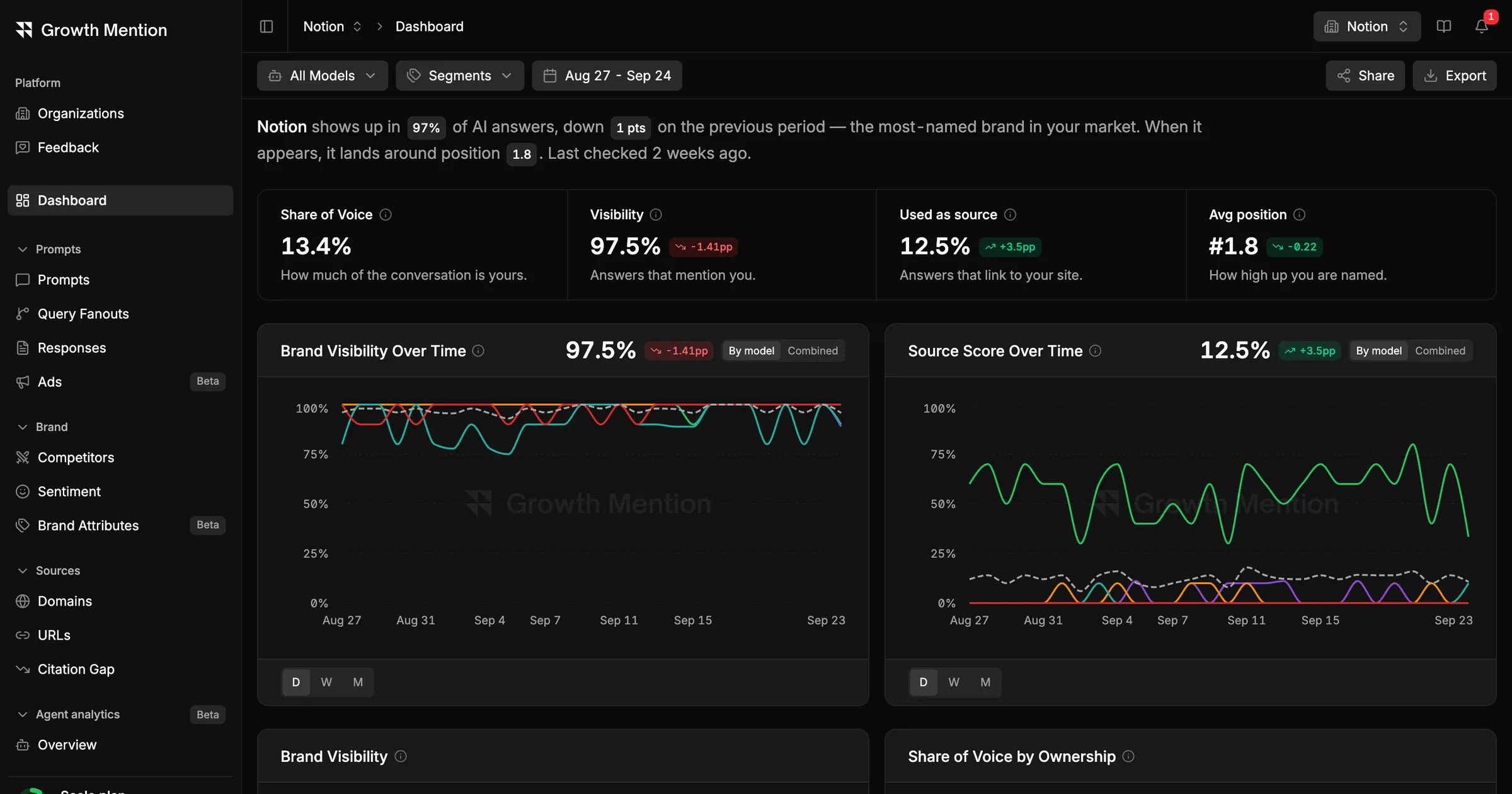
Every channel has a dashboard. Now AI search does too.
See who you’re up against in AI search, which brands get mentioned, and how each one is talked about.