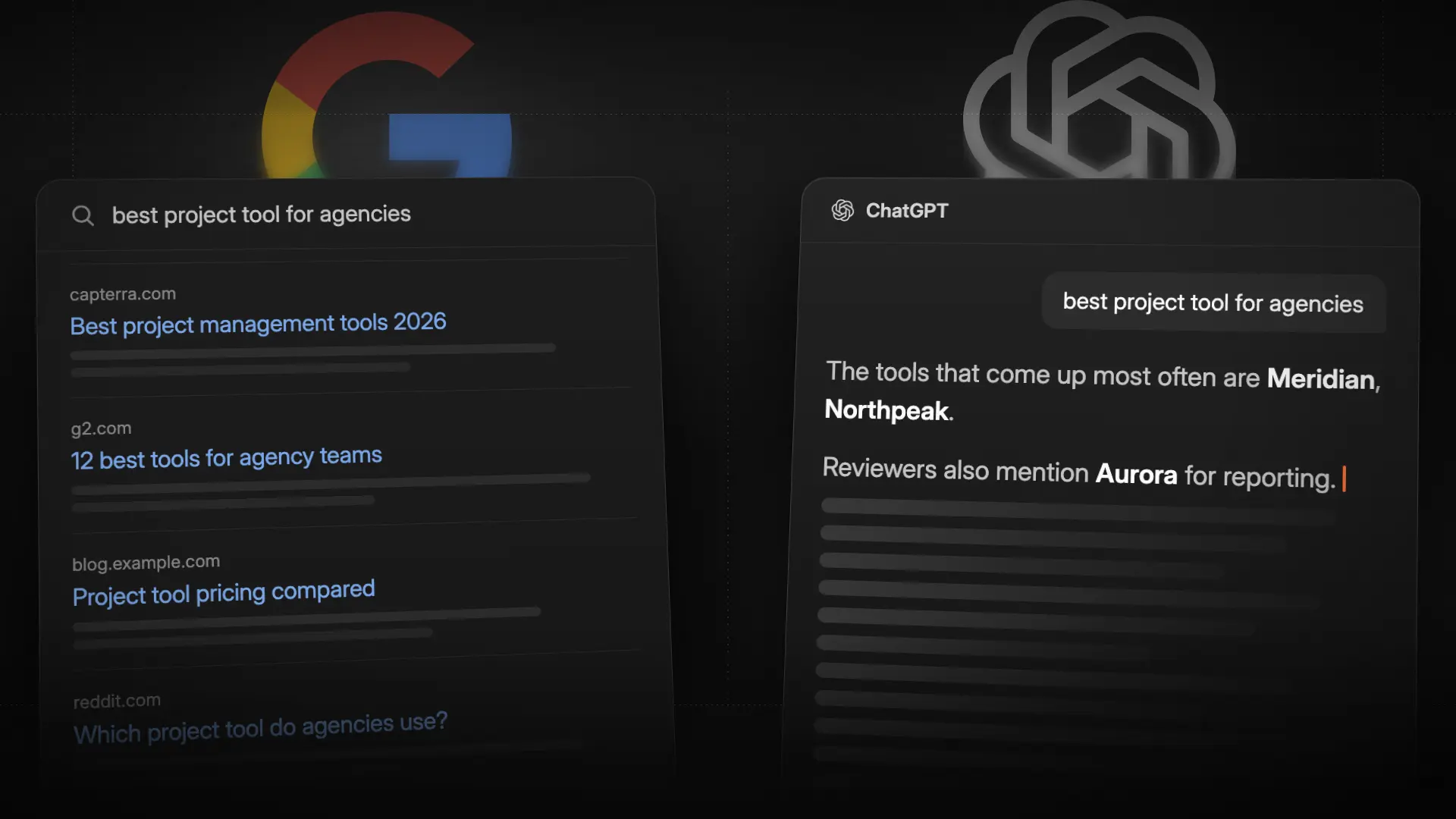
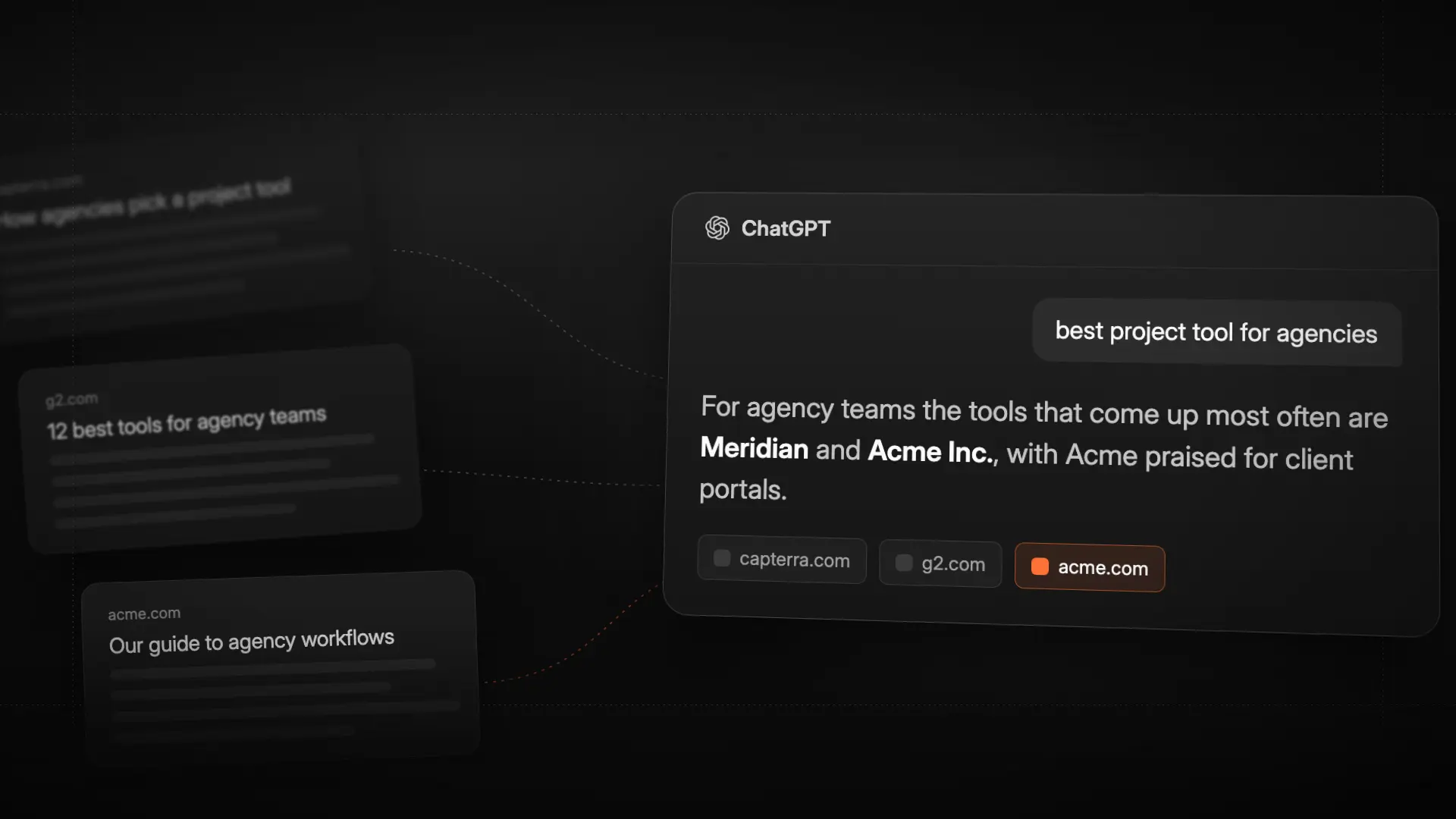
Answer Engine Optimization (AEO) is the practice of structuring content for AI systems to understand, trust, and cite, with the goal of having that content extracted and used directly in synthesized answers. This approach is a direct response to evolving search behavior, where users increasingly ask full, conversational questions, and AI provides direct answers instead of just lists of links. AEO ensures content appears in AI chat systems, featured snippets, and voice assistants, shifting focus from traditional keyword ranking to machine-readable, easily extractable information.
What answer engine optimization means and why it exists
Answer Engine Optimization (AEO) involves structuring content so AI systems can easily understand, trust, and cite it. The primary goal is to ensure your content is not merely ranked, but actively extracted and directly integrated into synthesized, concise AI responses.
This shift to AEO is a direct response to fundamental changes in how people search and how technology delivers information. Users now typically ask full, conversational questions. At the same time, search technology has evolved significantly; AI now delivers direct answers rather than just a list of links. These AI-powered systems encompass a range of applications:
- AI chat systems,
- featured snippets,
- AI Overviews,
- voice assistants.
Consequently, AEO prioritizes making content machine-readable and easily extractable, moving beyond the traditional focus on keyword ranking.
How AEO differs from SEO and why both still matter
Despite some similarities, AEO differs from SEO in several key ways, and both remain important for online visibility:
| Aspect | SEO | AEO |
|---|---|---|
| Goal | Rank high in traditional link lists, generate clicks and organic traffic. | Get content extracted, cited, and used directly in AI-generated answers, answer boxes, or voice responses. |
| Reliance on | Keywords, backlinks, site architecture, and crawlability. | Concise answer blocks, semantic clarity, structured data, and entity precision. |
| Relationship | AEO expands search optimization for a new era; it does not replace SEO. | Both are essential because user behavior now includes traditional search methods and interactions with AI answer engines. |
| Consequences of neglect | Lost visibility in classic search results, which remain a significant discovery channel. | Brand will not appear in the increasing number of answers provided by AI summaries and chat interfaces. |
AEO, GEO, GSO, and AIO – same trend, different labels
While the goal remains consistent, optimizing content for AI-driven answer composition goes by several names: AEO, GEO, GSO, and AIO. They all acknowledge a fundamental shift away from securing a high rank in lists of “blue links” toward having content selected and synthesized into a direct answer.
What AI answer engines actually look for in your content
AI answer engines prioritize content that is directly answerable, easy to parse, and supported by credible signals. They favor informational content that demonstrates specificity, factual precision, and freshness. Ultimately, AI systems rely on evidence to determine content suitability. This evidence includes:
- primary sources, original data, expert input, and other visible proofs of credibility,
- consistent use of terminology across related pages to aid AI interpretation,
- structured data, such as schema markup, for technical content interpretation,
- pages that are crawlable with minimal rendering friction for AI system access,
- clear entity relationships within the content to help AI engines understand its subject matter.
How to structure content so AI platforms surface it in answers
To ensure content appears in AI answers, structure it so each passage can directly answer a specific query. An effective method is to adopt an “answer-first” writing style, placing the direct response within the first sentence or 40-60 words.
Use question-like headings (H2s, H3s) that clearly signal the passage’s intent, followed immediately by the answer. Employ scannable formats to improve machine readability, including:
- bullets,
- numbered steps,
- compact paragraphs,
- tables.
Implement a plain, semantic HTML structure with a clear heading hierarchy (H1, H2, H3) to make the page easier for AI to interpret. Use structured data (schema markup), such as FAQ, HowTo, Article, and Product types, to further help AI systems understand the content’s purpose. Additionally, ensure topical completeness across related pages with consistent entity naming and concise factual support.
Why AEO requires ongoing tracking, not a one-time audit
Optimizing for AI answer engines demands continuous tracking, not just a one-time audit. This is because AEO is an iterative practice, and the AI systems it targets are dynamic. A single audit can only capture a moment in time, which is insufficient for effective AEO.
Answer engines frequently update their models, indexing, and ranking behaviors. The sources and citations used in AI responses also change, impacting brand accuracy over time. User prompts and query patterns evolve as well, requiring content to be continually recalibrated.
Ongoing tracking serves as the operational model for AEO. It ensures continuous monitoring of visibility and brand accuracy, measuring whether they are improving or declining. This approach uses tests and alerts to proactively identify issues before performance degrades, such as:
- new gaps in content,
- competitor gains in visibility,
- dropped citations from AI answers.
How to measure your brand’s visibility across AI search platforms
To measure your brand’s visibility across various AI search platforms, you need a defined set of metrics applied consistently. Growth Mention, an AI search visibility analytics tool, tracks how often – and how – AI search platforms name your brand in their answers. It monitors platforms such as ChatGPT, Gemini, Perplexity, Copilot, and Google AI Mode.
Growth Mention tracks several key metrics:
- Visibility (or prompt-level presence) – this is the share of answers that mention your brand for a given set of prompts,
- Share of Voice – how your brand’s mention rate compares against competitors for the same prompts,
- Position – where your brand is named within an answer,
- Sentiment – whether your brand is described positively, neutrally, or negatively,
- Citation frequency – how often your owned content is cited as a source.
These metrics are important because they can be directly linked to business outcomes, including AI referral sessions and assisted conversions.
Where AEO is heading as AI search matures
As AI search matures, AEO is shifting its focus. The practice is moving from traditional page ranking to what is now being called ‘citation engineering’ and ‘selection engineering’. The core goal is to craft content that AI systems will readily quote, summarize, and ultimately choose for inclusion in their direct answers.
This evolution also means that brand authority and factual clarity are becoming more important than traditional factors like keyword repetition. Structured content, particularly that which contains proprietary data, is gaining significant value, primarily because AI finds it easier to cite. The scope of the discipline is also broadening to incorporate multimodal content, catering to both voice and visual search.
Conversational content formats, such as FAQs, comparisons, and concise definitions, will become increasingly important for agent-led interactions. Success in AEO will be measured by new metrics:
- citation rate,
- inclusion quality,
- mention accuracy.